SURGE
Storms raise the sea itself
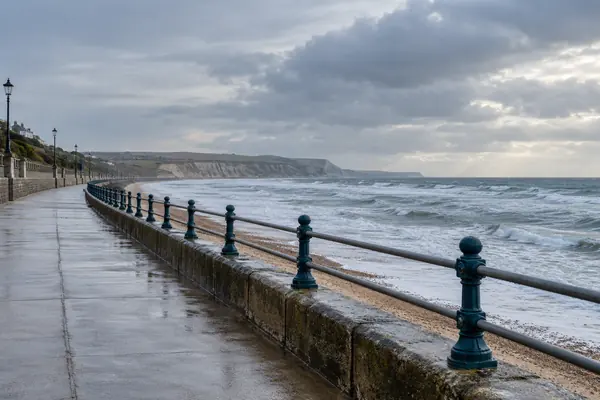
The Met Office says a storm surge comes mainly from high winds piling water against the coast, plus about 1 cm for every millibar the pressure drops.
See the numbers doodleprom
00THE SEAFRONT IN A STORM
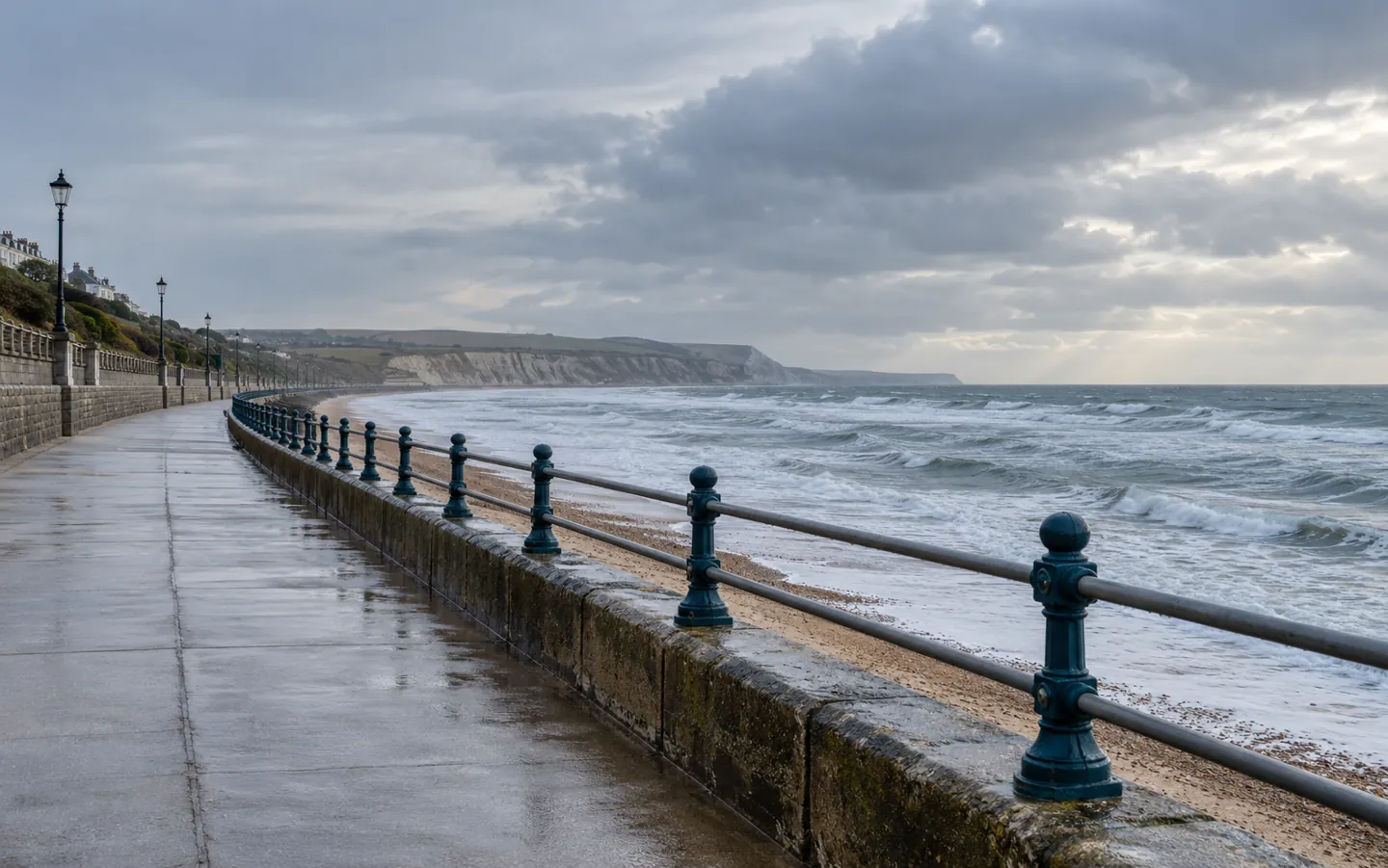
A promenade is a walkway and a sea defence at the same time.
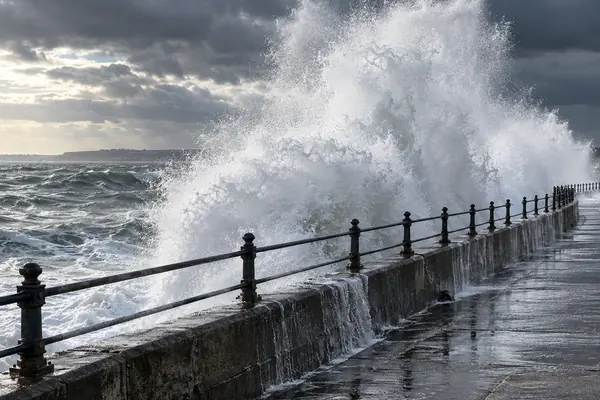
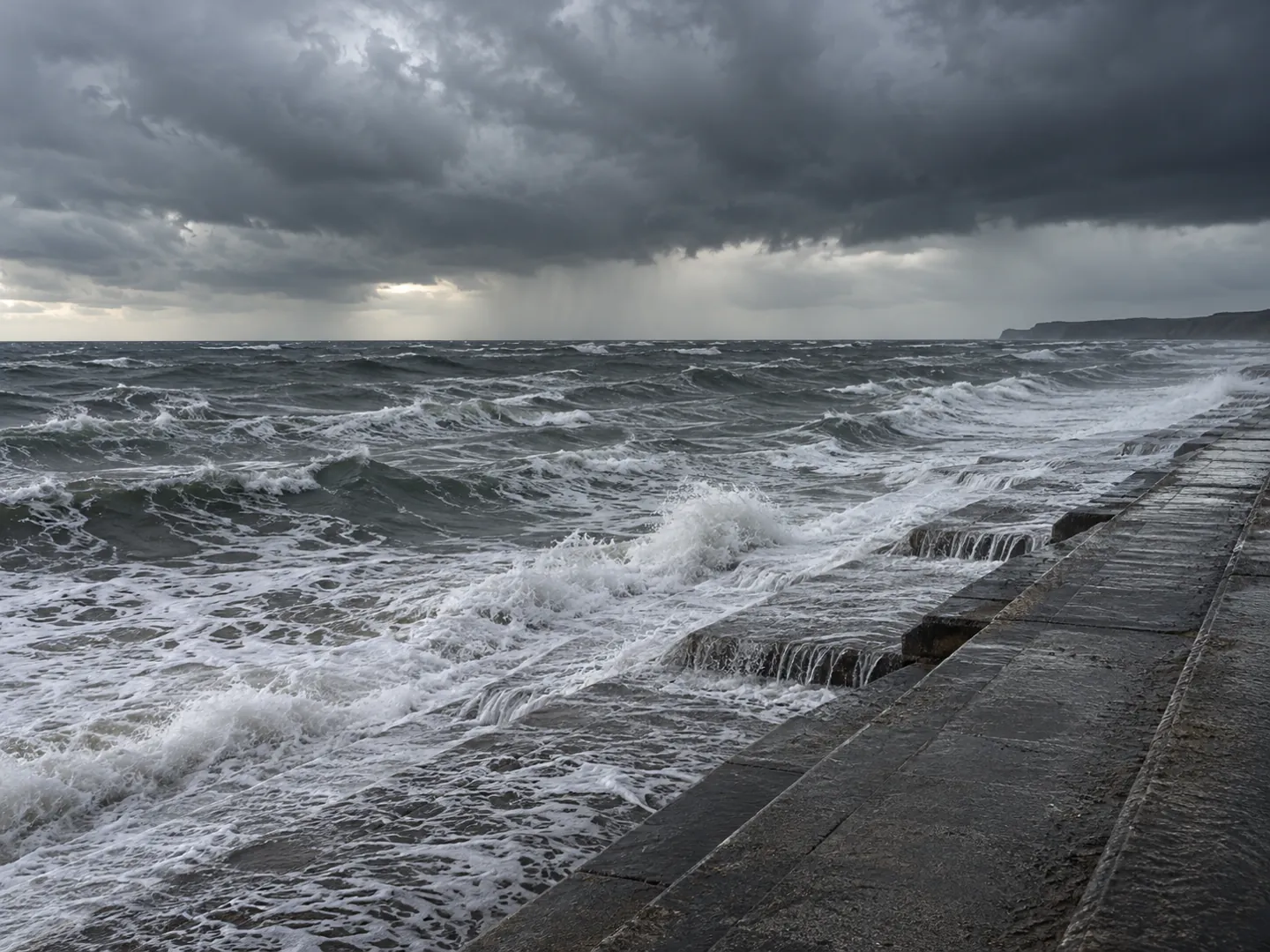
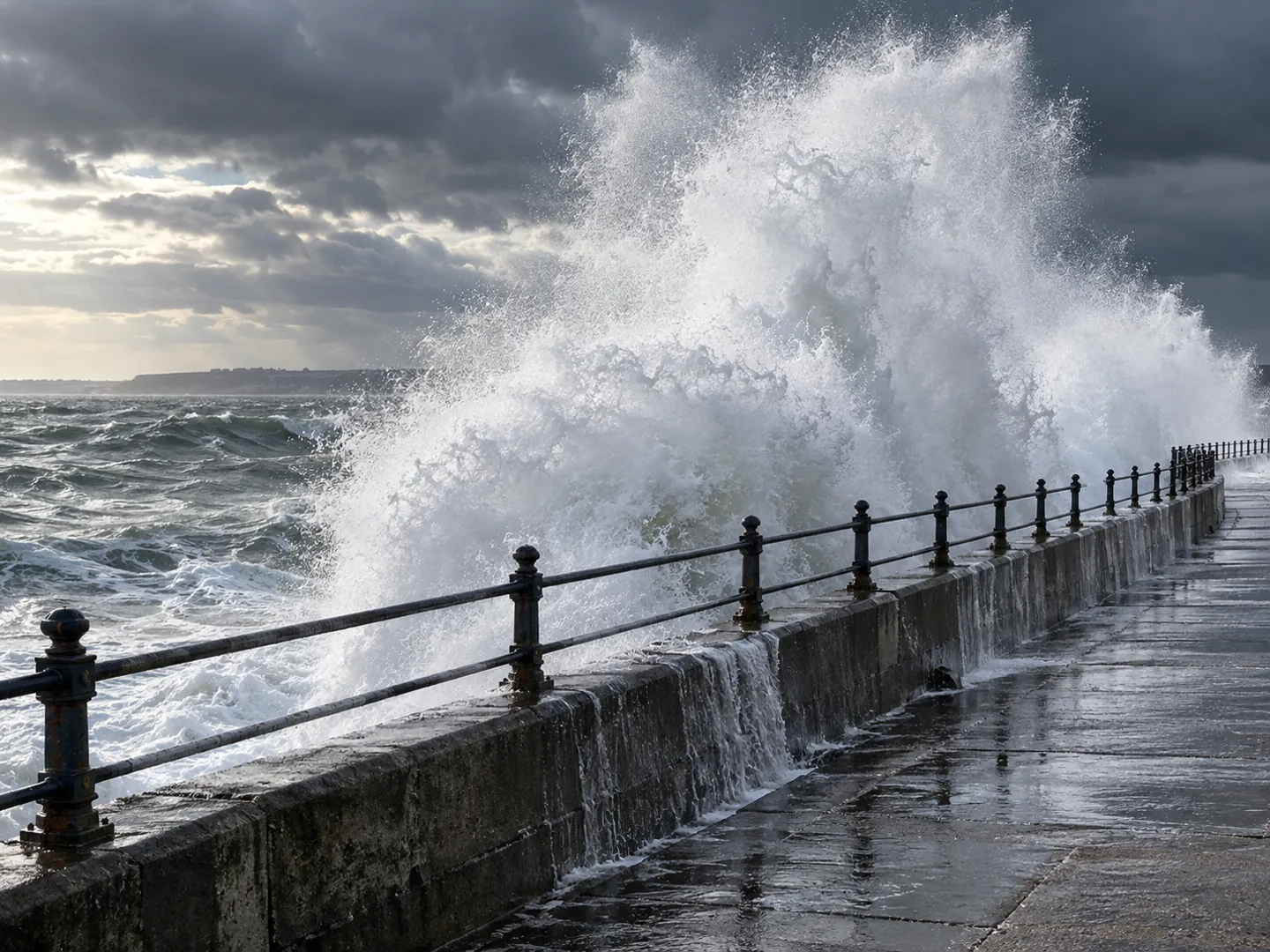
On a calm day it is the place for a stroll. In a storm, waves can run up the wall and pour or burst over the top. Coastal engineers call this overtopping, and the people most at risk are the ones standing right behind the wall.
Read a sea front01Principles
02THE SHORT ANSWER
High water and big waves together are the problem.
The shape of the wall decides how the water arrives.
SURGE
The Met Office says a storm surge comes mainly from high winds piling water against the coast, plus about 1 cm for every millibar the pressure drops.
See the numbersWAVES
Strong winds build large waves on top of the surge. These can damage sea defences or spill over the top, adding to the flood risk.
Before you goWALLS
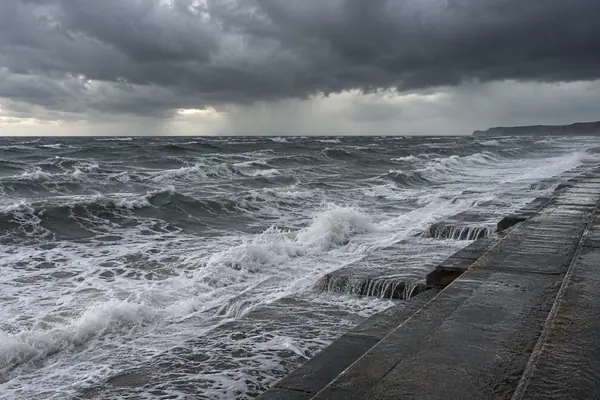
Engineers find waves break more gently on sloping embankments. Steep or vertical walls see occasional but intense breaking that can overtop violently.
Read a sea front03READ A SEA FRONT
Pick a feature to see what coastal engineers say it does to overtopping. The bar shows how strongly the research links that feature to hazard for people on the front.
Based on HR Wallingford research presented at the 2008 Defra Flood and Coastal Management Conference. General information only, not a safety assessment of any place.
04TWO NUMBERS WORTH KNOWING
One figure on how often waves kill in the UK,
one on how little water a walker can tolerate.
2–5 a year
People killed by wave action each year
HR Wallingford researchers report that on average about 2 to 5 people a year are killed in the UK through wave action, chiefly on seawalls and similar structures. In 2005 the figure rose to 11.
UK DEATHS · COASTAL RESEARCH
0.1 l/s per m
Overtopping limit for an aware pedestrian
Guidance in the same paper puts the tolerable mean overtopping for an aware pedestrian, with a clear view of the sea and a wider walkway, at 0.1 litres per second per metre of wall.
TOLERABLE LIMIT · ENGINEERING GUIDANCE
For trained staff, well shod and expecting to get wet, the paper gives 1 to 10 litres per second per metre. It also notes that average flows alone may not reliably show safety: the largest single waves can matter more.
05FOUR THINGS TO KNOW
Most overtopping happens when a storm, a surge and a high tide line up. These official tools and research findings help you see it coming.
GOV.UK's Check for flooding service shows current flood warnings and alerts, sea levels and flood risk for the next 5 days in England.
The Environment Agency's flood warning service is free and can call, text or email you. Floodline is 0345 988 1188, 24 hours a day.
The Met Office notes that in areas with large tides, like the UK, a couple of hours' difference in when a surge arrives can decide whether a place floods.
Coastal engineers note that spray blowing across seafront roads can cause a sudden loss of visibility, leading drivers to veer.
06WHY 1953 STILL MATTERS
On the night of 31 January 1953 a North Sea storm surge arrived at the same time as a high spring tide. The Met Office records more than 2,500 deaths around the North Sea, including 307 in England and 19 in Scotland.
After 1953 the UK invested much more in sea defences, such as the Thames Barrier, and in warning systems. On 5 December 2013 another large surge hit the east coast, a reminder that low pressure, high winds and high tides still combine.
07Questions
It is water from waves running up a sea defence and passing over the top, either as a gentle flow or a sudden, violent jet. Coastal engineers measure it as litres per second per metre length of wall.
The Met Office says it is mainly high winds pushing seawater towards the coast, with a smaller rise from low pressure of about 1 cm for every millibar change in pressure.
Research from HR Wallingford says waves tend to break gently on sloping embankments, while steep or vertical walls see occasional, intense breaking that can overtop violently and fast.
HR Wallingford researchers report that on average about 2 to 5 people a year are killed in the UK through wave action, chiefly on seawalls and similar structures, rising to 11 in 2005.
Use GOV.UK's Check for flooding service for current warnings, sea levels and the 5-day risk, or sign up free to Environment Agency flood warnings. Wales, Scotland and Northern Ireland have separate services.
08Sources
ABOUT THIS NAME
doodleprom.com is part of the DoodleSale portfolio. It isn't in an auction right now, but you can ask about leasing it.